When a facility starts feeling tight, the first instinct is often to look outward: expand the building, add a new unit, or move.
A pick module warehouse approach flips that thinking. Instead of adding square footage, it uses the cube you already have by building a dedicated multi-level picking zone that brings storage, pick faces, and travel paths into a tighter system.
In practical terms, a pick module can range from a large multi-level mezzanine built specifically for order picking, to smaller sections that combine shelving or carton flow and create a defined picking area. It is typically customised to a distribution centre’s requirements.
The reason it matters is simple: once SKU counts rise, the challenge is no longer “not enough racking.” It is the compounding drag of travel time, congestion, and pick-rate limits in the highest-touch part of the operation.
When multi-level picking beats adding floor space
A pick module warehouse layout tends to win when one or more of these conditions are true:
1) The high-SKU zone is consuming too much travel time
High-SKU operations often create long walks, frequent direction changes, and repeated trips back to packing or consolidation. A pick module concentrates that activity into a purpose-built zone so pick paths become more predictable.
2) Congestion is becoming the limiting factor
As volume grows, many warehouses do not “run out of racking” first. They run out of clear movement. A concentrated pick module can be designed with defined aisles, better separation of people and equipment, and cleaner replenishment paths. The goal is fewer traffic conflicts in the pick area.
3) Pick rates are capped by layout, not labour
If adding people does not increase throughput, the layout is usually the constraint. Multi-level picking can add pick faces and capacity close to the action without expanding the footprint, which can remove bottlenecks created by long travel loops.
4) You need a scalable picking “engine” for growth
A strong pick module is built as a repeatable system: add shelving, add levels, add pick faces, tune replenishment, expand conveyor scope. It is a better foundation for growth than a patchwork of ad hoc shelving expansions.
What a pick module “system” typically includes
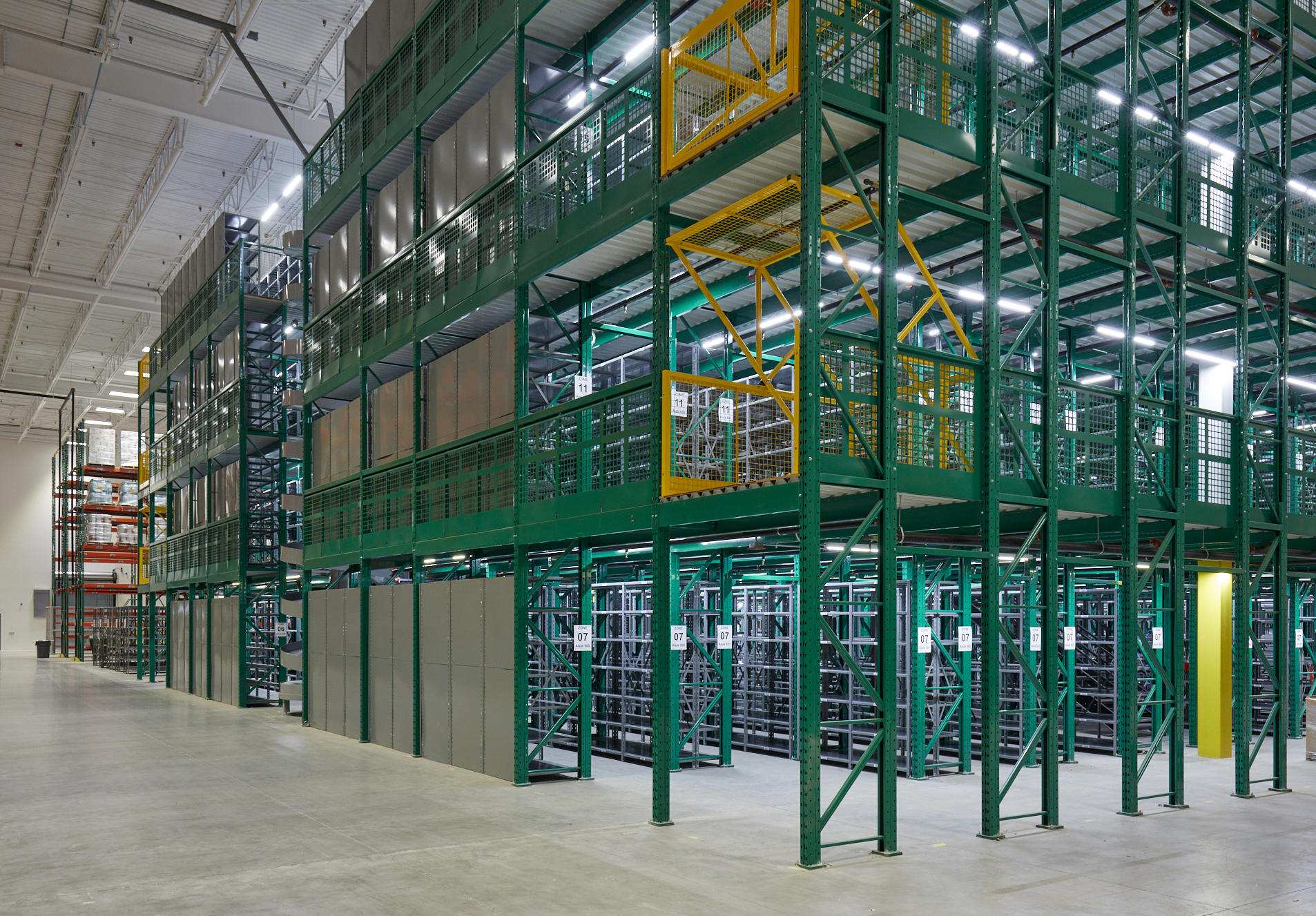 A pick module warehouse layout is rarely just one component. It is usually a coordinated set of building blocks:
Multi-level structure (often a mezzanine)
Warehouse mezzanines (storage platforms) are free-standing floor systems designed to add usable square footage inside the facility. Decking varies by application.
Industrial shelving and small parts storage
For high-SKU, small-part environments, industrial shelving and bin systems often do the heavy lifting. Shelving options can include small parts bins, modular drawers, retail display shelving, and heavy-duty systems.
Carton flow zones where it fits
Carton flow uses gravity feed, loading from the back and picking from the front so product advances as picks occur.
This can be useful in fast-moving pick slots, particularly where replenishment needs to be clean and predictable.
Conveyor integration and partner coordination
Pick modules often perform best when paired with conveyor, because it removes repeated walking trips to move picked product. As an example, 3D worked with Mainway Handling Systems to design, plan, and integrate a pick module with conveyor.
A real example of the “system” approach
In the CARQUEST | WORLDPAC project summary, we describe installing a 4-level pick module to optimise small parts picking, including conveyor integration and 17,500 shelves built into the structure.
The important takeaway is not the exact numbers. It is the pattern: pick module plus shelving plus conveyor, designed as one coordinated picking system.
A simple decision framework for operations leaders
If you are evaluating a pick module warehouse layout, these are the questions that usually clarify the decision quickly:
Where is the travel time happening?
Identify the zone where pickers spend the most time moving versus picking.
What is causing congestion?
Separate congestion caused by equipment, people, replenishment, or cross-traffic to shipping and receiving.
Is the constraint pick faces or pick flow?
If pickers wait, double-handle, or backtrack, it is a flow problem, not a storage problem.
Can you build vertically without creating replenishment issues?
Multi-level picking must include a replenishment plan, not just more shelves.
What does your growth path look like?
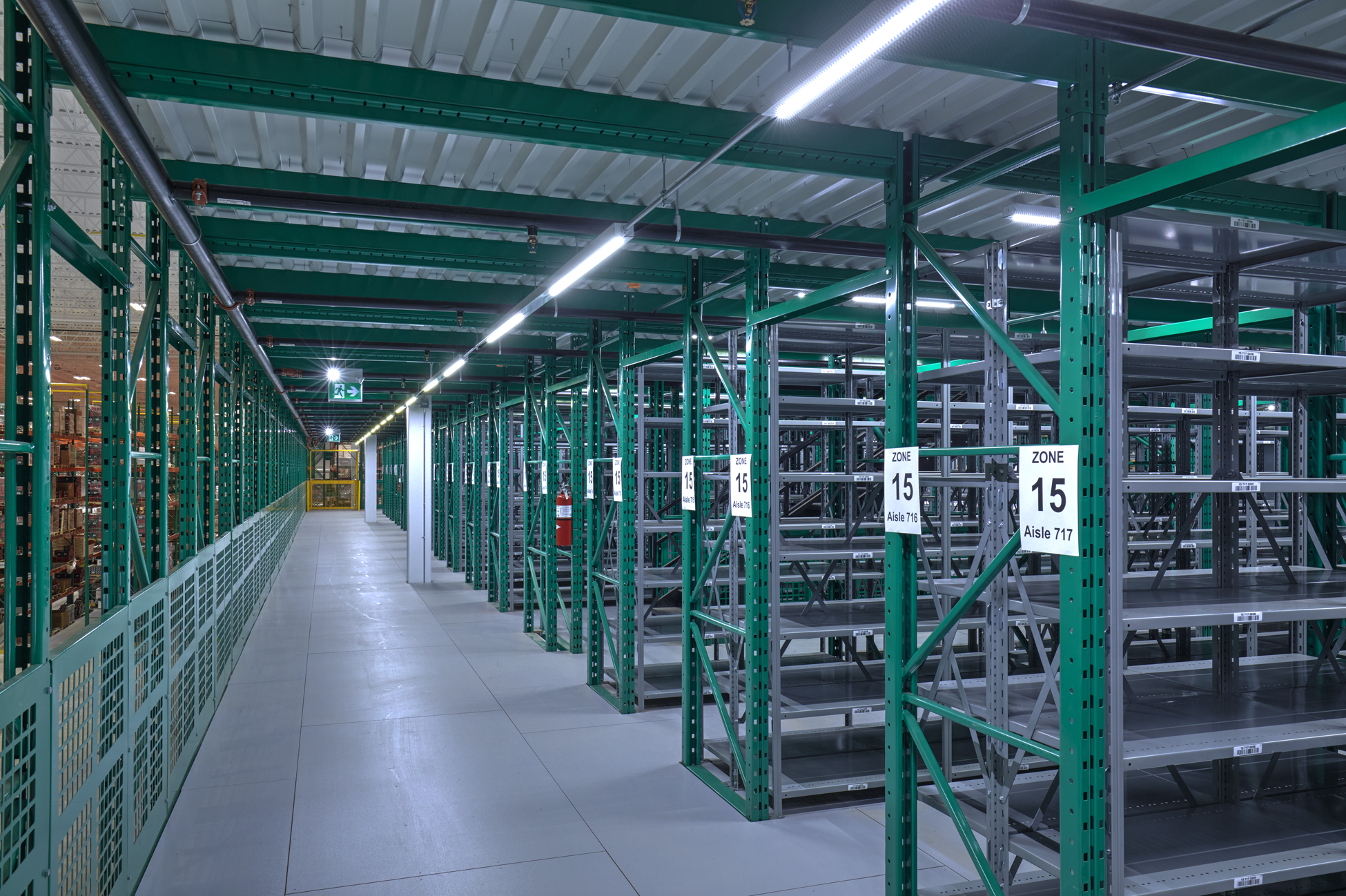 A pick module is often most valuable when it is designed to scale in phases.
If your high-SKU zone is hitting limits from travel time, congestion, or pick-rate ceilings, a pick module warehouse layout can be a practical alternative to expanding the footprint. The right approach starts with a layout and workflow review, then builds the picking zone as a coordinated system: structure, shelving, pick faces, and material flow.
If you’re in the market for a solution like this, we invite you to use our Contact Form and share:
– Ceiling height
– SKU count range and order profile
– Current pick method (cart, pallet jack, forklift, other)
– Where congestion is happening
From this we can get a better understanding of whether a pick module is likely to outperform a footprint expansion for your operation.