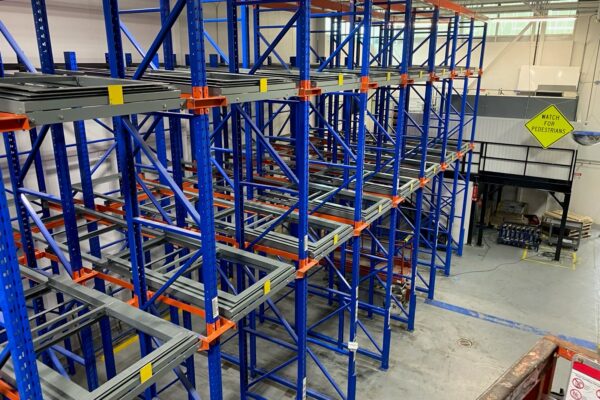
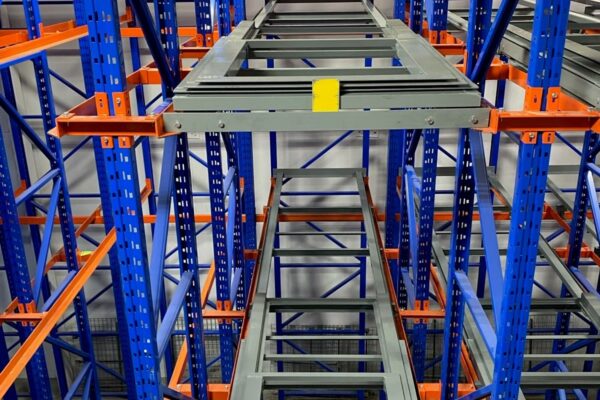
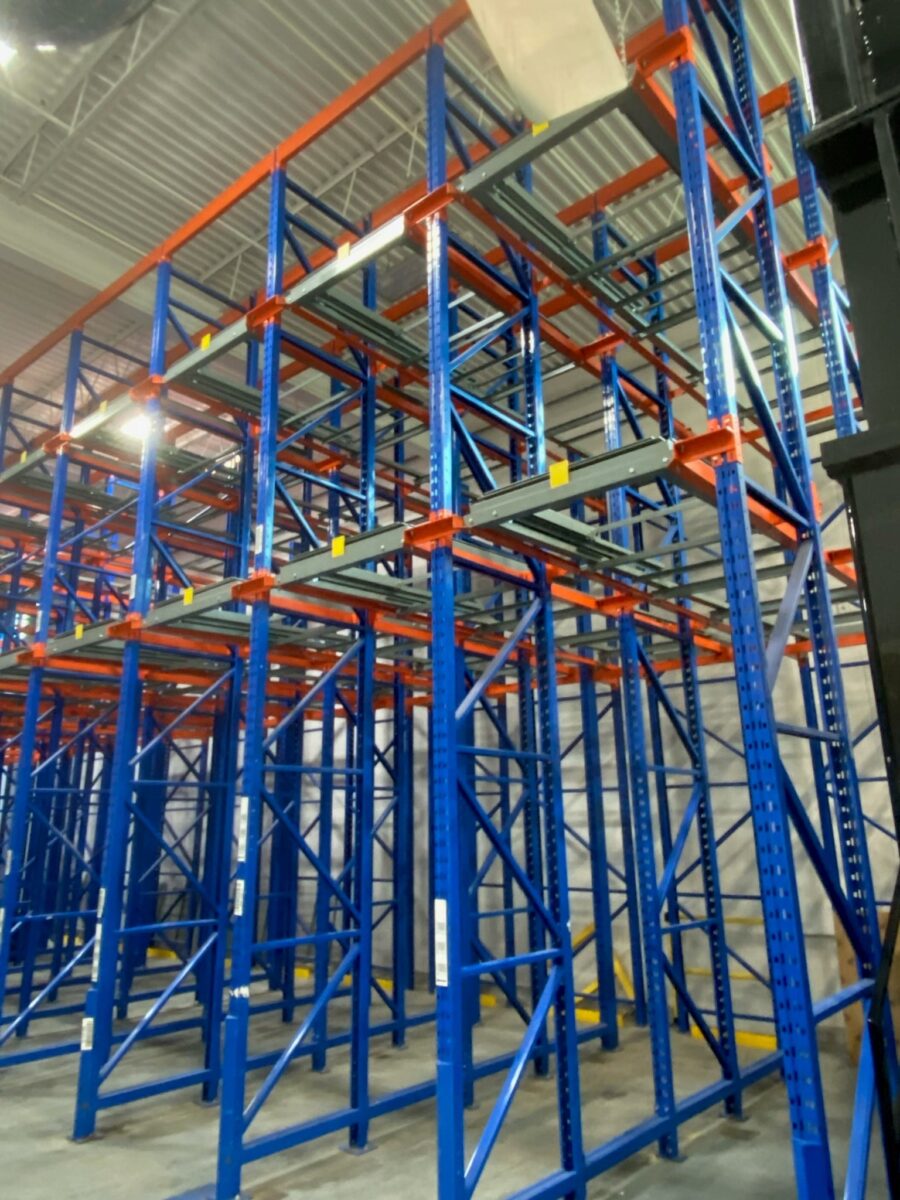
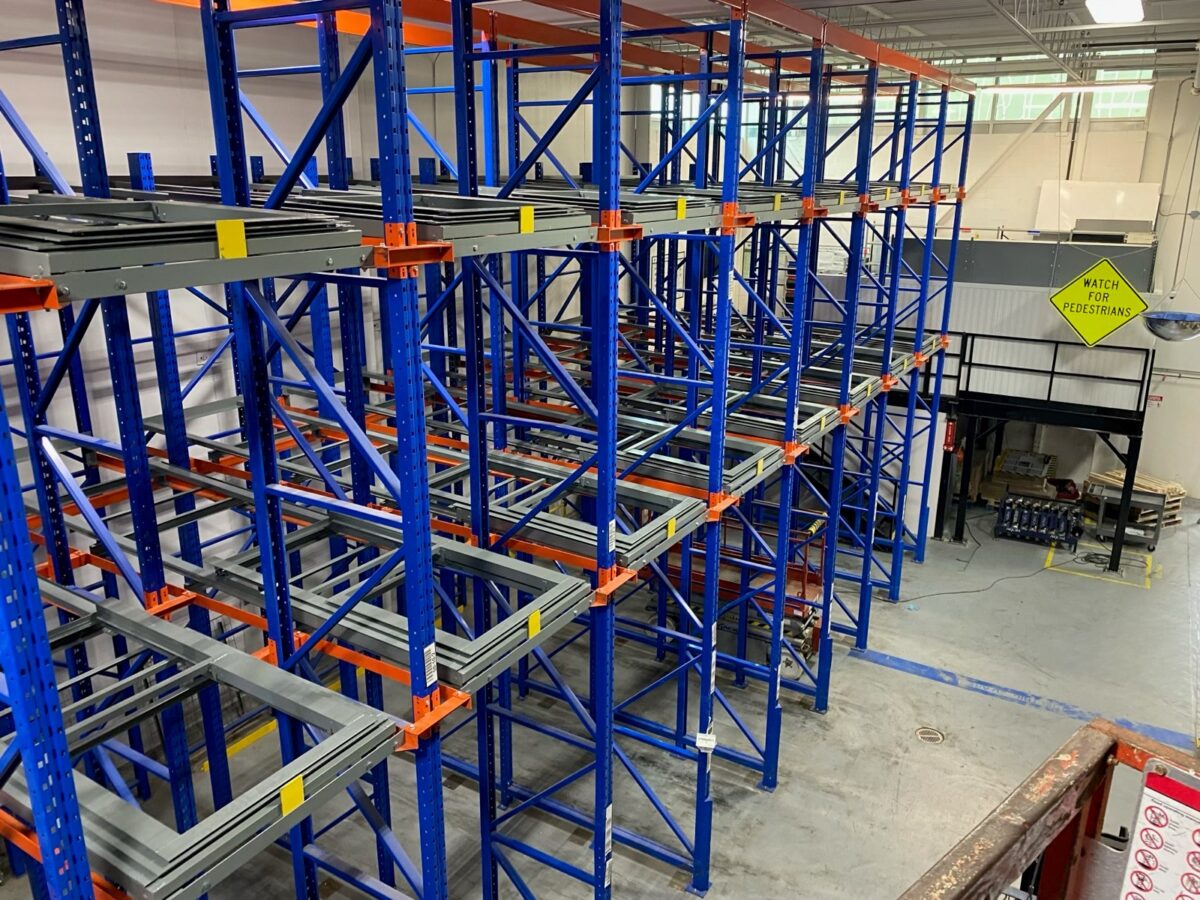
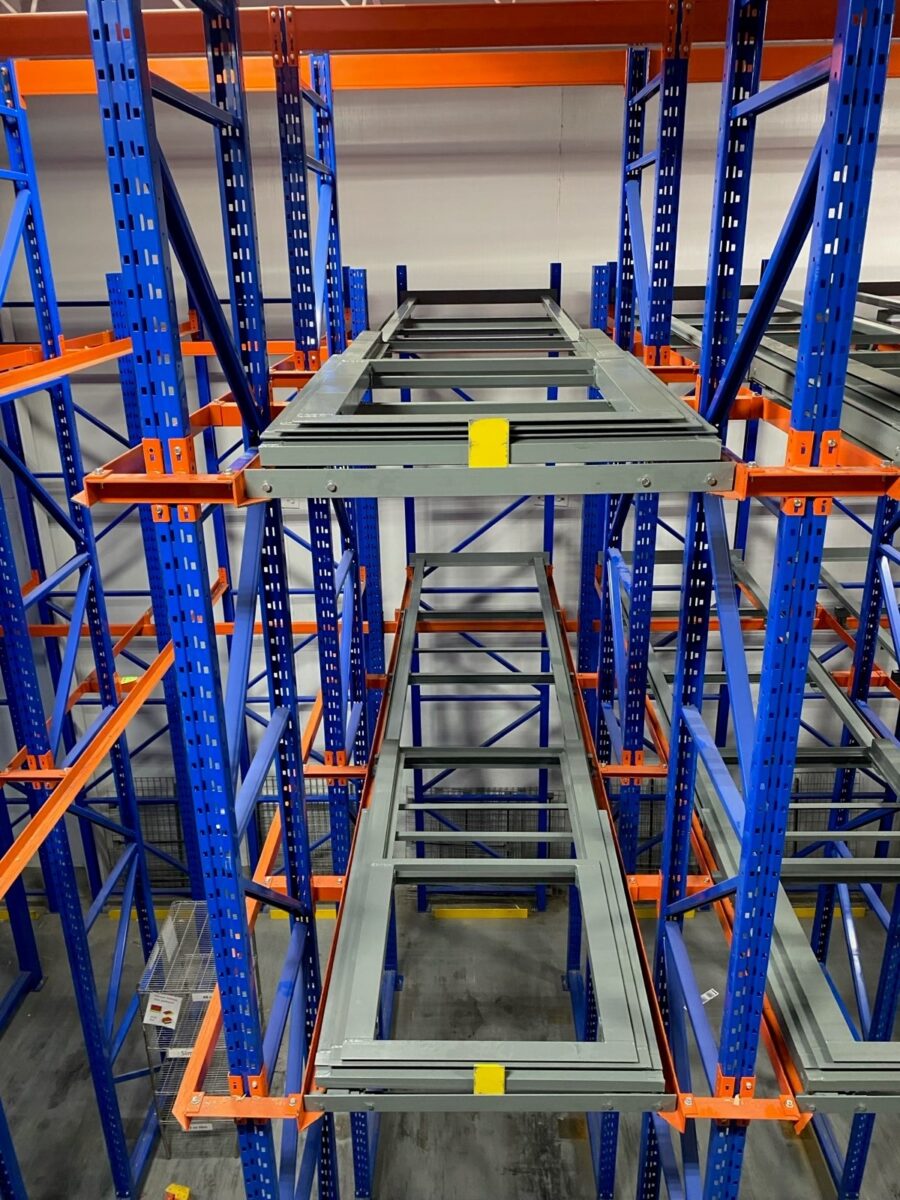
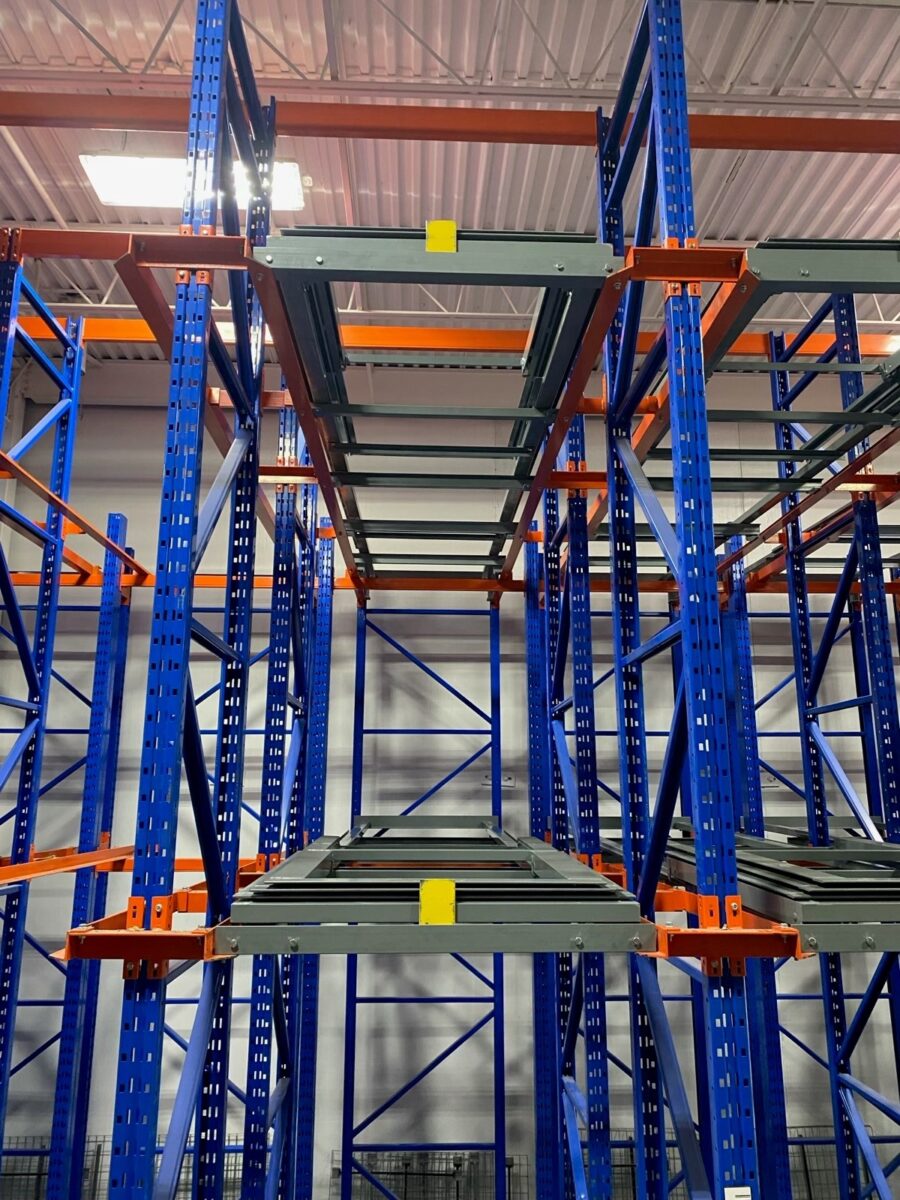
- Over 3 levels of pushback racking installed into an existing drive-in system
- Hybrid system with 10+ tunnels wide, combining pushback (top) and drive-in (floor level)
- Reduced SKU requirement per tunnel from ~72 pallets to just 18–20 pallets
- Achieved faster product access across 30+ pick faces in converted section
- Reused 100% of existing structural frames, avoiding full rack replacement costs
A Dynamic Storage Re-think
TreeHouse Foods is a leading North American manufacturer of private label snacking and beverage products. With a broad portfolio that includes crackers, cookies, pretzels, coffee, tea, and broth, TreeHouse supports many of the continent’s largest grocery, club, and e-commerce brands. In this project, the company’s broth production facility required a smarter way to store raw and packaging materials while making the most of a very limited footprint.
Pushback: The Right Ingredient
The plant was operating with a five-deep, four-high drive-in rack system. While drive-in offered theoretical density, it required a minimum of 70+ pallets of the same SKU to fill each tunnel. As production shifted toward a greater mix of SKUs, the system became increasingly inefficient.
Operators were forced to mix products vertically within drive-in tunnels (e.g., product A on the bottom, B in the middle, C on top). This slowed down access, created double-handling, and complicated inventory rotation.
At the same time, the facility needed to maintain a buffer of raw materials and packaging to ensure continuous production in the event of weather-related supply chain disruptions. Maximizing every square foot of capacity was critical.
TreeHouse had already installed a pushback system on one side of the room and quickly recognized its advantages: faster access, SKU flexibility, and safer operation without the need to drive into the rack. They asked if the existing drive-in system on the other side could be converted to pushback.
Because the original rack was relatively new and in excellent condition, a drive-in to pushback conversion was possible. 3D designed a hybrid system that combined:
- Floor storage with pallets double-stacked on the bottom level.
- Pushback lanes above, allowing each level to hold different SKUs without vertical constraints.
The pushback lanes were mounted directly onto the existing drive-in rails, adding only minimal height and preserving clearances. Pallet dimensions worked in favour of the retrofit, enabling installation without costly reconfiguration of the rack.
This approach not only delivered nearly a 40% increase in storage capacity, but also allowed the facility to reuse its existing rack investment — an advantage for the operations team in justifying the project internally.
A Hybrid Approach to High-Density Storage
The converted system provided immediate improvements in storage density, accessibility, and SKU flexibility. Instead of needing 70+ pallets to justify a drive-in tunnel, TreeHouse could now efficiently store 18–20 pallets per SKU in pushback lanes.
Stakeholders praised both the quality of the installation and the operational impact. The plant now has greater freedom to stage raw and packaging materials, better flexibility for production scheduling, and improved efficiency in daily operations.