Best-Fit Profiles, Constraints, and Required Inputs
A layer picking system can be a strong fit for high-volume distribution environments, but it is rarely something that should be quoted from a simple square footage number or a rough pallet count alone.
At a glance, the appeal is easy to understand. A layer pick attachment on a forklift allows an operator to clamp and move one or multiple layers of product at a time, which can substantially improve efficiency in the right application. In many cases, the layer pick zone is supported by two or three deep pallet flow so overstock is immediately available as source pallets are depleted.
That said, a layer picking system is not a plug-and-play answer for every warehouse. It works best when the product profile, order profile, replenishment logic, and downstream shipping process all align. When those inputs are defined early, the planning process becomes more efficient, the quote is easier to shape around real operating needs, and the final recommendation is more likely to support long-term performance.
This is why a proper layer picking discussion has to begin with the right questions.
What is a layer picking system?
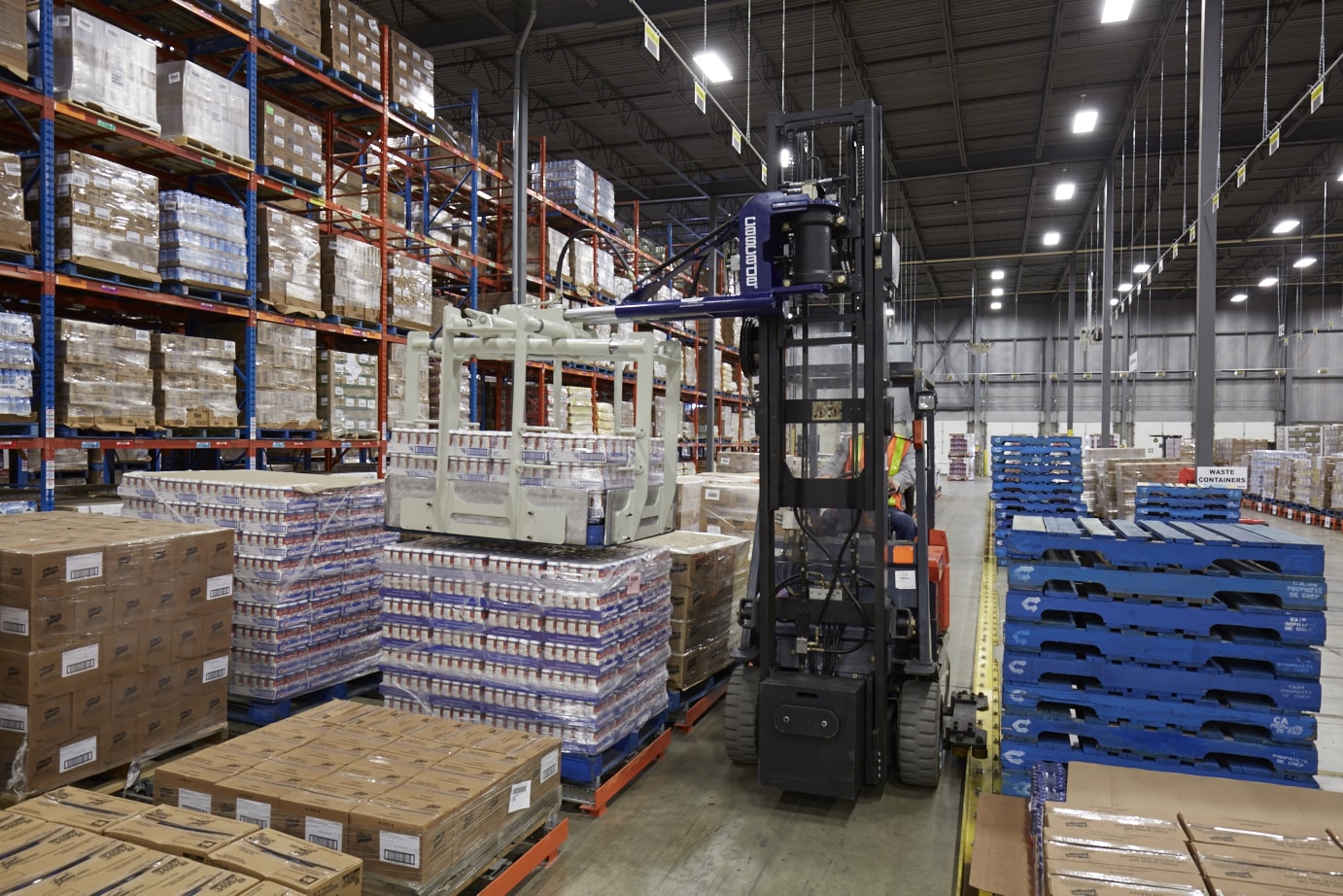
A layer picking system is an order fulfilment approach designed to move full layers of product instead of individual cases. Rather than building pallets case by case, operators use specialized equipment to transfer complete layers from source pallets onto outbound pallets. For distribution environments with the right SKU mix and throughput expectations, this can reduce touches, increase speed, and support more consistent pallet building.
In practice, the layer picking area is often fed by pallet flow or other reserve storage that keeps replenishment close to the picking zone. That matters because layer picking only works well when product is staged properly and the next pallet is ready when the current one runs low.
Where a layer picking system tends to fit best
A layer picking system is typically best suited to operations with:
- High case movement on a repeatable group of SKUs
- Stable pallet and case dimensions
- Order profiles that regularly require full layers
- Enough throughput to justify the equipment, layout, and process design
- Upstream replenishment that can keep the pick face supplied
- Downstream shipping and wrapping processes that can handle the output efficiently
This is one reason layer picking often enters the conversation in larger distribution environments rather than smaller, highly variable warehouse operations. It is similar to pick modules in that the solution is usually customized to the warehouse or distribution centre’s specific requirements, rather than selected from a standard product menu.
Where layer picking systems run into trouble
The challenge with a layer picking system is not usually the concept itself. The challenge is fit.
Many warehouses are attracted to the idea of improving speed, but speed alone is not enough reason to move forward. A layer picking system can become difficult to justify when any of the following issues are present.
- Throughput is not high enough
Layer picking makes the most sense when there is enough repetitive volume to support it. If the operation does not move enough layers per day, the investment can be hard to justify compared to more flexible picking methods.
- The pallet profile is too inconsistent
One of the first things that needs to be understood is the pallet profile. That includes pallet dimensions, product stability, layer consistency, case weight, packaging integrity, and stack patterns.
If pallets arrive with frequent variation, or if layer stability is poor, the system may require more intervention than expected. In those cases, the promised gains in efficiency can erode quickly.
- Upstream replenishment is not ready
A layer picking system does not operate in isolation. If reserve inventory is not positioned correctly, or if replenishment is inconsistent, operators spend too much time waiting for source pallets instead of building outbound loads.
The storage method feeding the system matters. In many applications, pallet flow or a related configuration helps maintain immediate overstock access near the pick area.
- Downstream processes cannot support the pace
Even a well-designed layer pick zone can underperform if the rest of the operation is not ready for it. Stretch wrapping, staging, labelling, conveyor integration, dock scheduling, and outbound sequencing all affect whether the system delivers on its potential.
If the downstream side creates bottlenecks, a faster pick process can simply move congestion further along the line.
Why quoting a layer picking system requires the right inputs
A common mistake in early-stage inquiries is asking for budget pricing before the core operating data has been defined.
That is understandable. Most teams want a quick sense of cost before spending too much time on design. But with a layer picking system, the wrong inputs lead to a misleading number. In many cases, that either creates sticker shock later or produces a quote that does not reflect what the operation actually needs.
To properly evaluate a layer picking system, the following inputs usually need to be reviewed early.
SKU profile
- How many SKUs are under consideration for layer picking?
- How many are true high-movers?
- How often does the mix change?
- Are certain SKUs seasonal, promotional, or highly variable?
A layer picking system is usually strongest when it is applied to the right slice of the SKU base, not necessarily to every product in the building.
Case data
- Case length, width, and height matter.
- Case weight matters.
- Case strength matters.
- So does the consistency of packaging from one production run to the next.
If case dimensions are not stable, or if packaging is prone to damage under clamping or transfer conditions, the design conversation changes quickly.
Pallet data
Pallet size, pallet height, pallet quality, and inbound stack pattern all influence feasibility.
- Are pallets coming in uniformly?
- Are there multiple pallet footprints?
- Are layers stable enough to be transferred cleanly?
Without solid pallet data, it is difficult to determine what level of automation or attachment-based handling is realistic.
Order profile
- How are orders built today?
- How many outbound pallets require full layers?
- How often are mixed pallets required?
- Where does each-touch case picking still need to happen?
This helps determine whether the layer picking system should be a primary fulfilment strategy, a dedicated zone for fast movers, or just one component within a broader pick module.
Replenishment and shipping readiness
- How will the pick zone be refilled?
- What storage system will feed it?
- How close is reserve inventory?
- What happens once the outbound pallet is built?
These questions are central to whether the system will actually perform.
Why this matters for distributors and warehouse operators
For distributors, throughput pressure is often increasing at the same time as labour pressure, floor space constraints, and service expectations. A layer picking system can help address those issues, but only when it is matched to the operation’s real profile.
For warehouse operators, the benefit of this more detailed process is that it leads to a better recommendation. In some cases, layer picking is the right path. In others, carton flow, selective rack, pallet flow, a pick module, or a hybrid design may create a better outcome.
That broader flexibility matters. 3D Storage Solutions positions itself as an integrator with the ability to propose multiple options rather than forcing a one-size-fits-all answer. Their design team works across custom warehouse layouts, engineering considerations, and system integration to find the best fit for a specific application.
A better layer picking conversation starts before the quote
The best layer picking projects usually begin with a structured discovery process, not a rushed equipment number.
That means understanding:
- What is being picked
- How often it moves
- How pallets arrive
- How outbound loads are built
- What storage feeds the process
- What level of throughput the business actually needs
When that information is available up front, quoting becomes easier, design becomes more accurate, and the conversation shifts from product pricing to operational fit.
That is also what separates a casual inquiry from a qualified lead.
Looking at a layer picking system for your distribution operation?
If your team is evaluating a layer picking system, the most productive first step is not simply asking for a price. It is reviewing your SKU mix, case dimensions, pallet profile, and throughput requirements with someone who understands how the storage, replenishment, and picking pieces work together.
At 3D Storage Solutions, that process starts with the application itself. The goal is to determine whether layer picking is the right fit, what constraints need to be addressed, and what supporting systems may be required to make the design work in the real world. Their broader product and integration capabilities are built around that solutions-first approach.
If you have more questions about how this all relates to your unique situation, drop us a line; we’d love to discuss your project!